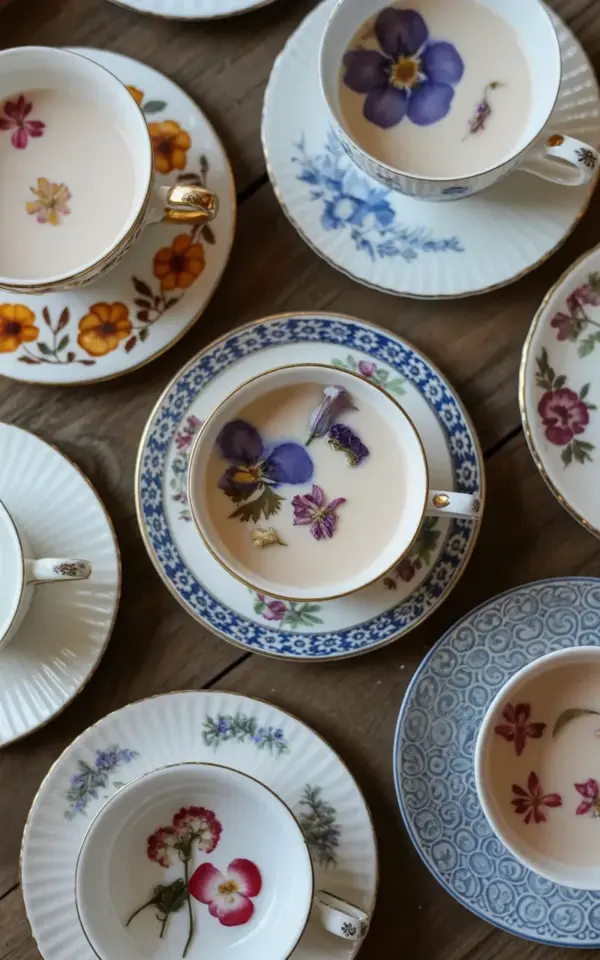
There you have it, the most charming kind of clutter. A collection of mismatched floral china scattered across a dark wood table, and somehow it looks like a curated gallery instead of a yard sale explosion. You have probably seen this exact style all over Pinterest, that top-down photograph where the teacups seem to float on the polished surface. It feels spontaneous, but trust me, there is a method to the madness.
Arranging a **vintageteacups** collection is less about the rules of interior design and more about the rhythm of the pieces themselves. I have spent way too many afternoons moving the same cup back and forth by two inches, so let me save you the trouble. The goal is to create a display that looks both intentional and effortlessly collected, like you have been gathering these treasures for decades (even if you just binge-bought them on Etsy last week).
This is not a fine art installation, it is a tea party table that begs to be touched. The trick is to treat the wood table as the canvas and the cups as the paint. By the end of this guide, you will know exactly how to arrange your own floral china so it looks like it belongs in a magazine, or at least like you have excellent taste.
## Choosing the Right Dark Wood Table for Your China Display
Before we even talk about the pretty cups, we need to talk about the stage. The contrast in that famous photo, the one with the blue and white cup sitting in the center with milk, works because the table is dark. A heavy walnut or a rich mahogany finish makes the pastel florals and the delicate gold rims literally pop off the surface. If your table is a lighter oak, do not panic. A dark wood table runner or a stained wood tray placed underneath can create that same grounding effect.
You want a table with enough surface area to let the saucers peek out, but not so large that the collection looks lost. A side table, a coffee table, or even a wide bench works perfectly. Just make sure the wood is waxed or polished so the cups slide easily when you are rearranging them. There is nothing worse than dragging a porcelain cup across a rough, unsealed surface and hearing that awful screech.
## Mix Floral Patterns Like a Pro: The Art of the Chaotic Collection
Alright, look. The biggest mistake people make is trying to buy a matching set. Do not do it. The beauty of a vintage teacup display is in the chaos of it all. You want a blue and white border pattern cup sitting right next to an orange and brown floral rim piece. You want the scalloped saucers mixing with the plain ones. It is that visual friction that makes the eye travel across the table, looking at every single detail. If everything matches, the eye just glosses over it.
When you are mixing patterns, try to find a common thread, even if it is subtle. Maybe they all have a hint of pink in the flowers, or maybe they all feature a specific type of bloom like a rose or a chrysanthemum. In the photo reference, the purple and pink flowers floating in the milk against the blue border is the anchor piece. Start with your loudest, most distinct cup as your focal point, then build the rest of the arrangements around it, pulling the secondary colors from that print into the other cups.
Here are some quick tips for grouping them that I have learned through trial and error:
– Keep the same color family grouped together in clusters, like all blues and whites on one side.
– Alternate the heights by placing some cups on small stacked books or a cake stand.
– Do not be afraid to turn a handle sideways to catch the light or show off a unique shape.
– Leave a little breathing room between clusters so the dark wood shows through.
– Angle the cups slightly, the “scattered” look actually takes the most positioning to get right.
## Creating a Teacup Display with a Collected, Layered Look
You are not just placing cups on a table, you are layering a story. Let the saucers peek out from under the cups like a skirt. The saucer is half the visual weight, so do not tuck them away completely. Slide the cup forward on the saucer so you see the floral motif on the rim. It breaks up the monotony of circles and adds a little depth to the shadow.
Consider adding a few non-teacup elements to break up the roundness. A vintage spoon, a small creamer jug, or even a loose flower or two scattered on the wood brings a different texture to the party. Just keep it minimal. You want the china to be the star. If you have too many extra props, it starts looking like a cluttered thrift store shelf instead of a curated **vintagechina** display.
## Using Color to Make a Unique Teacup Table Arrangement
Honestly, grouping by color is the easiest way to keep this from looking like a mess. If you have a ton of cups that all have red flowers, put them together. If you have a stack of those white porcelain cups with blue willow patterns, make a little sub-community for them on the left side. This gives the table a sense of order without requiring you to purchase a matching set. It makes the display look collected, not assembled.
For that specific Pinterest-worthy look, try a gradient approach. Start with the deep oranges and browns on one end, transition through the yellows and greens, and end with the cool blues and purples. It is a sneaky way to make a chaotic mix of **floralchina** feel highly intentional. I did this once for a spring tea party, and everyone thought I had hired a stylist. Nope, just organized the cups by the color wheel.
## Perfect Tea Party Table Styling Ideas for Your Next Gathering
This is where you get to shine. The teacup display is usually the centerpiece, but you can absolutely style around it with your food and serveware. Use small, low plates for scones so they do not block the view of the cups. Keep your tea pot to the side, or on a separate drink station, so the main tablescape remains primarily about the porcelain collection.
When the guests sit down, the cups should be within arm’s reach. That is the secret to a good tea party table, it is interactive. People love picking up a cup that speaks to them, turning it over to check the maker’s mark, and holding it while they chat. Do not treat the display like a museum exhibit. Let them use the cups. The slightly worn gold rims and the little crackle in the glaze are part of the charm.
## Adding Height and Dimension to Your Vintage China Display
While the flat lay is classic, you can add some dimension if your table is big enough. Place a couple of teacups on a tall cake stand in the center, and let the others stay on the table surface. This creates a social, multi-level feel to the table that is perfect for a buffet line. Or, place a thick, vintage hardcover book under a cluster of cups to give them a little platform.
Do not forget the power of a mirror or a silver tray. If your wood table is a little too dark and you want to brighten things up, place a round mirror down and put the cups on that. It catches the light and doubles the visual impact of the floral patterns. Just be careful, mirror polish and porcelain can get slippery, so maybe put a little felt pad under the saucers.
## Finishing Touches: Final Arrangement and Care Tips for the Table
Once you have all the cups placed, walk around the table and look at it from every side. Sometimes a cup that looks perfect from the top looks awkward from the profile. The handle is your steering wheel, point them in different directions so there is no repetitive “salute” look happening. Step back, squint your eyes, and check the balance of the colors. If one corner looks too heavy, swap a colored cup for a white one.
Another random thought here: if you plan on serving hot tea, do not place the cups directly on the bare wood without a saucer. That is a heat stain waiting to happen. And if you have pets, maybe keep the florals fake or just accept that a cat tail will inevitably sweep through the display. It is part of the adventure.
At the end of the day, a teacup collection is meant to be used and loved. The chips, the crazing, the little gold flecks that have worn off over the last fifty years, that is the history you are displaying. It is not about perfection, it is about the charm of the imperfections.
So go ahead, pull your china out of the cabinet, dust it off, and give it a place of honor on that wood table. Mix the old with the older, let the saucers peek out, and enjoy the fact that you have given these lovely pieces a second life. Save this idea for your next tea party, and do not be afraid to experiment with the arrangement until it feels right to you.
This post was researched and drafted with AI assistance, then personally reviewed and edited by Diana before publishing.
Leave a Comment