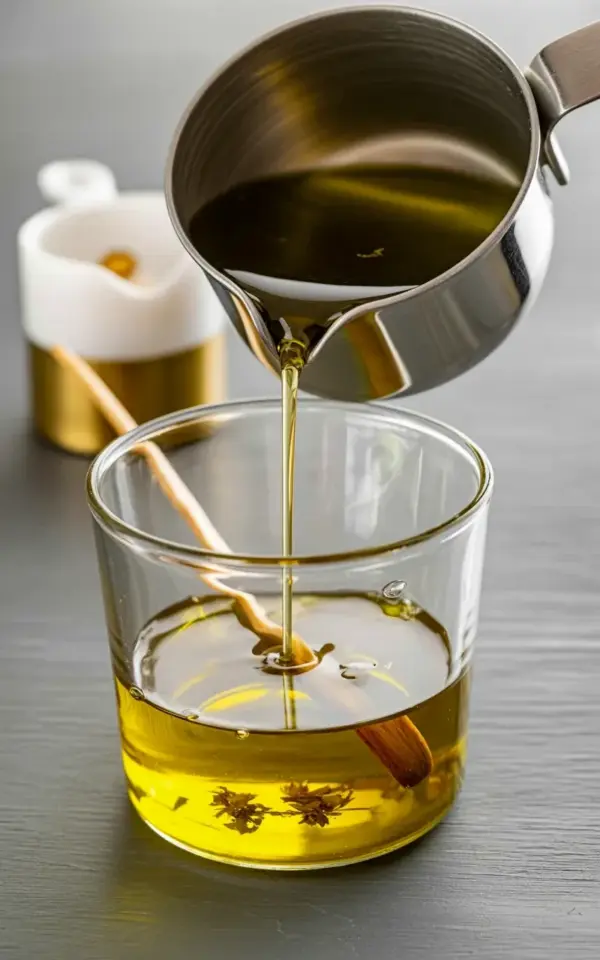
There’s a quiet little ritual that happens in my kitchen most mornings, and it involves a silver cup, a glass jar, and oil that catches the light like liquid gold. You might have seen the photo trend floating around Pinterest, the one where olive oil pours from a silver measuring cup into a clear glass container, with tiny flakes of gold leaf swaying on the surface. That exact moment, the oliveoil swirling and glinting, is the definition of cozykitchen energy. It’s not just about cooking; it’s about the slow, deliberate pace of making something look and feel beautiful. The bright, even light in those images makes the whole scene feel warm and calm, and honestly, it makes me want to slow down and pay attention to the small details again.
Look, I’m not a professional food stylist or a chef. I’m just someone who genuinely believes that the tools we use and the way we present our ingredients can change how we experience cooking. Anyone can grab a bottle and pour straight into a pan. But there’s a different vibe when you decant the oil first. That silver cup in the photo? It’s a nostalgic piece, maybe an old measuring cup from a relative, and it holds just the right amount. Pouring from it into a jar feels intentional. The gold leaf is admittedly a touch of luxury, a little unnecessary, but that’s sort of the point. It turns a routine task into a visual treat, and the kitchenvibes shift entirely.
Why a Simple Pour of Olive Oil Feels So Satisfying
There is a scientific reason why watching that thick, golden stream pour feels so good. It has to do with viscosity and how the liquid clings to the spout for just a second before it falls. The surface tension breaks, and suddenly you have this beautiful, unbroken ribbon of oil moving through the air. It’s mesmerizing, and it forces you to be present.
I think it’s also about the contrast in textures. You have the hard, cool metal of the silver cup against the smooth, fragile glass of the jar. Then you have the oil, which sits somewhere between liquid and solid in how it moves. And floating in that liquid are those delicate, paper-thin pieces of gold leaf, completely inert and edible, but visually they look like tiny suns swimming in a yellow sea. It’s a lot of sensory input for something so simple.
For me, the satisfaction comes from the sound too. There’s a specific glug, glug, glug that happens when the level in the jar rises. It’s thick and heavy, not like water at all. Maybe that’s why the idea of slowliving appeals to me so much; it’s about noticing those sounds and textures that we usually ignore. You can’t rush a good pour, not if you want to avoid a mess, so you are forced to stand there and just wait for the cup to empty.
What Is Gold Leaf and Is It Actually Safe to Eat?
So, you might be looking at that image and wondering if the gold leaf is real. It is. It’s called edible gold leaf, and it’s typically made from actual gold that has been beaten into extremely thin sheets. The sheets are so delicate that they basically dissolve or float on whatever liquid they touch. You can buy a small booklet of it online or in specialty baking stores, and a little goes a long way.
The texture when you accidentally eat a piece of it is weirdly nonexistent. It has no taste, and it’s so thin that it just kind of sticks to your tongue and melts away or cracks. The purpose is purely aesthetic, a visual cue that the dish in front of you is special. In the context of olive oil, it turns a standard kitchen staple into a decorative centerpiece. I’ll be honest, I bought a pack on a whim a few months ago and I’m still using the same booklet. You use so little.
If you want to try this at home, make sure you buy gold leaf that is specifically labeled as “edible” and not just decorative gilt. Edible gold is marked with a purity level, usually 22 to 24 karats, and it has to be produced in a food-safe facility. The price tag is a bit steep, generally a few dollars per sheet, but as a one-time purchase, it goes far. Just don’t drop the sheet while you’re peeling it away from the tissue paper, because it will float up and stick to your arm out of pure spite.
Creating the Cozy Kitchen Moment in Your Own Home
The magic of the photo isn’t just the oil or the gold, it’s the entire setting around them. Look at the rest of the image: a gray wooden surface, a white ceramic container with gold accents in the background, and a simple wooden stick resting in the oil. That composition is the core of the cozy kitchen aesthetic.
To recreate this vibe, think about light first. The photo uses bright, even lighting, what photographers call diffused light. You want that soft daylight coming through a window, but not harsh sunlight that creates deep shadows. It’s the kind of light that makes everything look a little hazy and warm.
Next, curate your surfaces. Don’t throw a bunch of random stuff into the background. That white ceramic piece with the gold trim in the image isn’t there by accident; it anchors the color palette. For your own setup, keep things minimal.
– Use natural materials like wood, stone, and linen to build texture.
– Keep the color story consistent, neutrals like gray, white, beige, and then that pop of yellow from the oil.
– Add one personal object, like a vintage spoon or a hand-thrown mug, to make it feel like yours.
– Remember that the reflection on the glass is your friend. Don’t wipe the jar perfectly dry; those little streaks and droplets are what catch the light.
The Gold and Wood Combination That Just Works
Here’s the thing about that wooden stick submerged in the oil. At first, I thought it was just a stylist’s prop, but it actually serves a purpose. It’s a pouring stick or a swizzle stick, used to control the flow of oil and prevent it from spilling over the edges of the jar. When you pour liquid into a glass container, it can glug out erratically; the stick gives the liquid a surface to cling to, making the pour smoother.
I picked up a long, thin piece of birch wood from a craft store, and it works perfectly. It’s also just a lovely object to look at. The contrast between the rustic, organic grain of the wood and the luxurious, metallic shimmer of the gold leaf is a beautiful contradiction. One feels earthy and grounded, while the other feels ethereal and precious. That duality is why this photo trend works so well. It’s a farmhouse aesthetic meeting high-end glamour, and they get along great.
Make sure the wood you use is untreated and washed. You don’t want any strange chemicals leeching into the oil you plan to cook with. Something like a clean chopstick or a hard wood skewer works just as well. It doesn’t need to be fancy.
How to Pour Olive Oil Like a Pro (Without Making a Mess)
Ok so, let’s talk about the actual mechanics of the pour because I’ve definitely messed this up before. The first time I tried to do this little kitchen moment, I tipped the silver cup too fast, and the oil bubbled up violently in the jar, pushing the gold leaf up the side. It was a sticky mess.
The trick is to pour slowly and close to the target. Hold the silver cup just an inch or two above the opening of the glass jar. Tilt the cup gradually, don’t just dump it. Let the oil stream hit the inner wall of the jar or the wooden stick, not the center of the liquid, to reduce splashing. Watching the level rise gives you a visual cue to start straightening the cup before it hits the rim.
Also, always have a cloth or a paper towel dampened nearby. Trust me on this one. Oil is slippery, and gold leaf, once it gets wet, will stick to your counter and your fingers and refuse to let go. It’s not a disaster, it’s just a test of patience. Once the jar is full, the gold leaf should naturally settle on top. If it sticks to the side of the glass, use the wooden stick to gently push it back into the oil.
Savoring the Slow Living Kitchen Vibe
The entire point of this exercise is to decelerate. Busy mornings mean grabbing a granola bar and rushing out the door. A slowliving approach means giving yourself five extra minutes to do something beautiful, even if it’s just pouring oil into a jar. It’s a small act of rebellion against the speed of modern life.
I’ve started keeping this jar of oil on my kitchen counter, and it honestly makes me smile every time I see it. The gold leaf doesn’t deteriorate, so it just sits there, floating, waiting for the next time I need to roast vegetables or make a salad dressing. It’s a constant reminder to not take things so seriously. The kitchen is the heart of the home, and it should feel like a sanctuary, not a service station.
The clean-up and prep are part of the ritual too. Washing the jar, wiping the silver cup, arranging the wooden stick. It’s simple, physical work that clears your head. Slow living isn’t about having a perfect house or expensive ingredients; it’s about doing ordinary tasks with attention and care. You might find that taking a photo of your pour helps you see the beauty in it, but even if you’re just doing it for yourself, the result is the same. It’s a moment of calm.
Easy Ways to Use This Fancy Olive Oil in Your Cooking
Once you have this beautiful jar of oil in your kitchen, you’re going to want to use it. Don’t waste it on high-heat frying; that will destroy the visual appeal and the delicate flavor. Use it as a finishing oil. Drizzle it over a bowl of creamy hummus, or use it to top a finished pasta dish. The gold leaf is edible, so there is no issue with eating it straight.
I like to use it as a bread dip. In a shallow bowl, add a dash of balsamic vinegar, a pinch of flaky salt, and cracked black pepper. Then, pour a generous swirl of your gold leaf oil over the top. The pepper and salt will stick to the gold flakes, and you get a little sparkle with every bite of sourdough. It’s the easiest appetizer for guests, and they will absolutely ask about the shiny bits in the bowl.
You can also use the oil to make a simple salad vinaigrette. If you shake it in a jar, the gold leaf will break into smaller specks, which honestly looks even prettier. The oil itself retains its standard flavor, so don’t expect a metallic taste. It’s just regular high-quality olive oil, with a fun secret inside. Try it on a simple green salad with lemon and shaved parmesan. The bright light in the photo, the cozy kitchen, the calm feeling, it all translates to the table when you serve something this pretty.
So, I hope you’re inspired to maybe pick up a little jar, a silver cup, and a tiny booklet of gold leaf. It’s a low-stakes experiment that might just change how you feel about your afternoon snack. Give it one attempt, and if you end up with oil on your elbow. well, that’s part of the story too. Let me know in the comments what your favorite small kitchen ritual is, I’m always looking for new ways to slow down and enjoy the process.
This post was researched and drafted with AI assistance, then personally reviewed and edited by Diana before publishing.
Leave a Comment