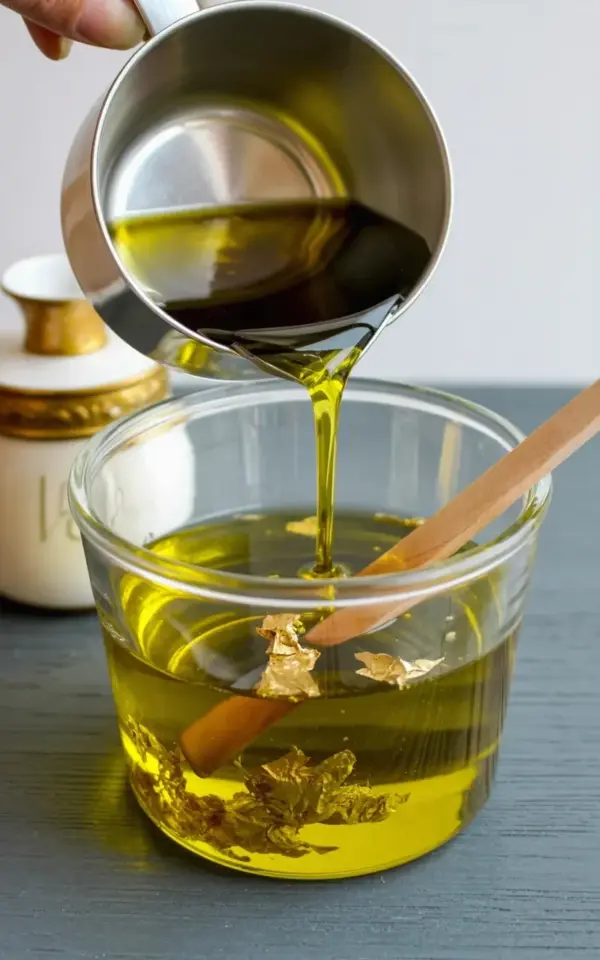
Let me tell you about the first time I poured gold leaf olive oil into a glass. I had just unpacked a tiny bottle that cost more than my favorite bottle of red wine, and honestly, I was a little nervous to open it. But the moment that liquid gold hit the glass on my gray wooden counter, I got it. I completely got it. The silver measuring cup tilted, the oil streamed out in a smooth ribbon, and those impossibly thin flecks of gold swirled around like confetti caught in a slow-motion breeze. It was mesmerizing in a way I did not expect from a pantry item.
That moment turned into a full-blown obsession with gold leaf olive oil. Not because it’s fancy for the sake of being fancy, but because it genuinely changes how a dish feels. It adds a visual spark that makes people lean in. If you’ve ever wanted to make a simple dinner feel like a celebration, this is the easiest shortcut I’ve found.
What Makes Gold Leaf Olive Oil Different from Regular Olive Oil
Gold leaf olive oil is exactly what it sounds like: premium olive oil with tiny, edible gold flakes suspended inside. The gold is completely flavorless and odorless. It’s not there to change the taste, it’s there to change the experience.
Regular olive oil is a workhorse. You use it for sautéing, roasting, drizzling, dipping. Gold leaf olive oil is more of a showpiece. It’s the difference between wearing your favorite jeans to a party and wearing something with a little shimmer. Both are great, but one of them commands attention.
I’ve found that the best gold leaf olive oils use a high-quality extra virgin base. The gold flakes are just the accessory. The oil itself should still taste peppery, grassy, or buttery depending on the varietal. If the oil underneath is mediocre, the gold won’t save it.
The Best Way to Serve Gold Leaf Olive Oil at a Dinner Party
Here’s the thing about serving gold leaf olive oil: it’s not about the food, it’s about the theater. When I hosted my last dinner party, I set out a small clear glass container with the oil and a wooden stick resting on the rim. That stick, by the way, is a game changer. It gives guests something to stir with and lets them watch the gold flakes dance.
I served it three ways that night, and each one got a different reaction:
- Drizzled over a burrata and heirloom tomato salad, where the gold caught the light beautifully.
- In a small dish with balsamic vinegar for bread dipping (this was the crowd favorite, honestly, people could not stop staring).
- And poured directly into a glass of chilled rosé sangria as a decorative flourish, which was admittedly risky but worked out great.
The key is to let people see the pour. Don’t just hand them a plate with oil already drizzled on it. Do it at the table. Let the gold flakes catch the light in that clear glass container. Let it shimmer.
Why Pouring Olive Oil into a Glass Matters More Than You Think
Pouring olive oil into a glass instead of directly onto a plate changes the whole mood. It turns a condiment into a moment. I noticed this almost immediately at my own dinner party. When I poured the oil from the silver measuring cup into that clear glass, every single person at the table paused their conversation to watch.
There’s something hypnotic about the way the oil moves. It’s thicker than water, so it pours slowly, and the gold flakes floating on top get pulled under by the current before rising again. The bright, even lighting in my kitchen made subtle reflections dance on the glass surface. It was honestly better than any centerpiece I’ve ever bought.
So if you’re planning to serve gold leaf olive oil, invest in the right vessel. A clear glass container is non-negotiable. You want to see the color and the movement. A white ceramic container with gold accents, like the one I have in the background of my kitchen counter, is nice for storing extra oil, but the glass is where the magic happens.
Gold Leaf Olive Oil for Cooking: Does It Survive the Heat?
Ok so here’s a question I get asked all the time: can you actually cook with gold leaf olive oil? The short answer is yes, but I wouldn’t waste it on a hot pan. Gold flakes are edible and safe to consume, but they’re not going to do you any favors in a stir-fry.
Heat destroys the visual appeal. The gold flakes get lost in the food, and the oil’s delicate flavor gets overpowered by whatever you’re cooking. I tried it once with a simple salmon fillet, pan-seared in gold leaf olive oil with a little lemon and dill. It tasted fine, but honestly, it was a waste of expensive oil. The gold didn’t show up at all, and I might as well have used my regular extra virgin.
Instead, I use gold leaf olive oil for finishing. Drizzle it over soups, grilled vegetables, pasta, or even vanilla ice cream (yes, ice cream, trust me on this one). The contrast between the warm dish and the room-temperature oil is lovely. And the gold flakes look absolutely stunning against dark colored foods like beetroot risotto or a rich mushroom tart.
How to Store Gold Leaf Olive Oil and Keep It Looking Fresh
Gold leaf olive oil is not something you use every day. It’s a special occasion oil. And because it sits around between events, you need to store it properly. Too much light will degrade the oil and dull the gold flakes.
I keep mine in a cool, dark pantry. The white ceramic container with gold accents that I mentioned earlier is perfect for this, it’s opaque, it seals well, and it matches my kitchen aesthetic. For the oil I’m actively using, I pour a small amount into the clear glass container and leave it on the counter for the dinner party. The rest stays tucked away.
Also, here’s a small but important tip: don’t use a metal spoon to stir the oil. It can scratch the glass and doesn’t look as nice. Use a wooden stick instead. Not only does it look more natural and organic, but it also doesn’t conduct heat, so the oil stays at the perfect temperature.
Where to Buy Gold Leaf Olive Oil and What to Look For
Gold leaf olive oil is becoming more popular, so you can find it at specialty grocery stores, gourmet food shops, and online retailers. I’ve seen it at local farmers markets too, usually from vendors who infuse oils with herbs and spices and have branched out into the decorative stuff.
When you’re shopping, look for a few specific things. Check the harvest date on the bottle. Fresh olive oil is essential, and gold leaf oil tends to be more expensive, so you want to make sure you’re getting something high quality. Look for a dark glass bottle that protects the oil from light. And read the label to confirm the gold is food grade and edible.
One more thing: price matters, but the most expensive bottle isn’t always the best. I’ve had a mid-priced gold leaf olive oil that was far better than a premium brand because the base oil was fresher and more flavorful. Don’t be afraid to ask for a sample, if that’s an option, or read reviews from people who actually used it, not just photographed it.
How to Make Your Own Gold Leaf Olive Oil at Home
Not gonna lie, making your own is surprisingly easy. I tried it after my first bottle ran out and I didn’t want to wait for shipping. All you need is a high-quality extra virgin olive oil and edible gold leaf. You can find edible gold leaf online or at baking supply stores, and it’s much cheaper than buying pre-made gold leaf olive oil.
Here’s what I did. I poured a cup of good olive oil into a clear glass container. Then I took a sheet of edible gold leaf and carefully tore it into small pieces with my fingers. You do not need to be precise here. The uneven pieces look more organic when they float in the oil. I dropped them in and gave the container a gentle swirl.
Full disclosure, the flakes tend to settle at the bottom after a few hours. That’s normal. Just give the container a gentle shake before you serve it. This homemade version doesn’t have the exact refined look of the commercial stuff, but it’s perfect for a casual dinner party. And the process is actually kind of fun. It feels like you’re making a magic potion in your kitchen.
One warning though: edible gold leaf is extraordinarily delicate. It disintegrates if you touch it with wet hands. Make sure your fingers are completely dry or use tweezers. And don’t breathe too hard while you’re handling it, I learned that one the hard way. Tiny gold flecks went everywhere and I spent the next hour wiping them off my counter.
Final Thoughts on Gold Leaf Olive Oil
Gold leaf olive oil isn’t going to transform your cooking. It’s not going to make your food taste dramatically different or healthier or more authentic. What it does is transform the experience of eating. It adds a little magic, a little sparkle, a reason to pause and look at your plate before you dig in.
For me, that’s worth it. I love watching it pour from a silver measuring cup into that clear glass. I love the little gold flakes floating in the golden oil. And I really love the look on my guests’ faces when they realize they’re eating something a little out of the ordinary. If you’re hosting a dinner party soon, do yourself a favor and save this idea. A bottle of gold leaf olive oil, a clear glass container, and a wooden stick are all you need to turn an ordinary meal into something memorable.
This post was researched and drafted with AI assistance, then personally reviewed and edited by Diana before publishing.
Leave a Comment